
Could prestige car showrooms create more memorable moments? The case for a physical brand statement.
The high-end luxury automotive retail space is a fascinating space that has become an ever critical customer touchpoint. The product has never been more extraordinary. The engineering, the technology, the design, all of it is operating at a level that would have seemed implausible a decade ago. Yet walk into many prestige showrooms and the physical environment has not really kept pace. The space often feels functional, the cars are exceptional but there’s a disconnect, they’re not having the same conversation.
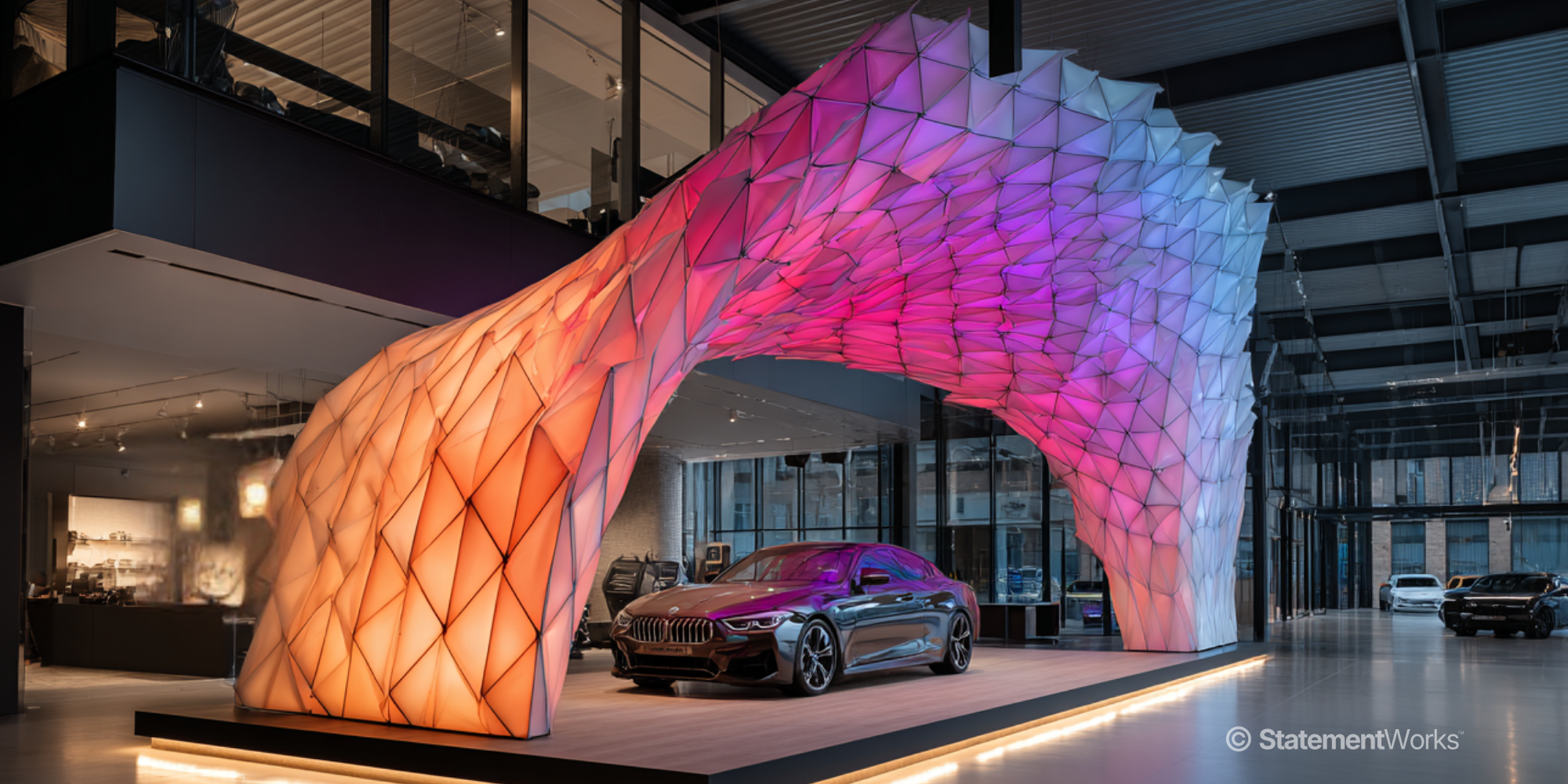
The shift to electric vehicles has accelerated this tension. The traditional dealership model, built around the forecourt, the test drive route, and the handshake close, is outdated. What is replacing it is something closer to a brand experience destination, something manufacturers know, with some investment programmes already under way for flagship events and showrooms. However it could be said that the manufacturer's vision isn’t carried through to regional or franchise dealerships.
It’s been understood for years that a significant majority of prestige buyers will pay more for the right experience, as evidenced by J.D. Power data.
The current and most interesting question is what the right experience actually looks like when someone is standing in that space.
The showroom is not just a place to see the car, it should be the physical expression of every promise the brand has made. It is where abstract brand values become something you can stand inside.
Consider the handover scenario, the space where a customer collects their vehicle for the first time. It is currently, in most prestige dealerships, a pleasant but generic space: good seating, a branded backdrop, perhaps a wrapped car behind a curtain. The moment is ceremonial in the customer's mind but the reality of that space, more often than not, is a mile away from that emotion.
Now consider what a deliberate physical intervention does to that moment. A suspended sculptural piece overhead, fabricated from materials that reference the brand's engineering heritage. Sculptural forms, precisely machined components, surfaces and colours that compliment the vehicle beneath. Not decoration, but a considered physical statement that says this brand takes the quality of every detail seriously, including the room you stand in when you take ownership of something you have saved for, chosen carefully and waited longingly for.
The commercial effect is threefold. The customer photographs it and shares it at the precise moment of highest emotional engagement with the purchase, generating organic reach the dealership cannot buy. The space develops its own reputation independently of the car, extending the brand into design and lifestyle conversations it would not otherwise reach, and the customer's memory of the handover. That moment will likely determine whether they return and whether they refer others, so it becomes imperative to make that physical experience, that brand statement, a genuinely remarkable one, rather than merely pleasant and transactional.
For dealer principals and regional dealer groups, this is a capital decision, not a marketing budget question. What sits within the manufacturer's framework, what makes a customer remember this dealership rather than the one forty minutes up the road, belongs to the business. A well-conceived physical statement in a handover suite, a reception space, or a client lounge outlasts any campaign running alongside it. It is there every day, working without a media spend attached.
The EV transition, high-end design language, consumer and social behaviours have all created a critical design brief for the prestige automotive sector to reinvent what it feels like to buy, collect, and own an exceptional vehicle. The physical showroom is where that brief gets answered, or where it gets missed entirely.
The car deserves a space that is worthy of it. So does the customer.